
Yak Bones for Dogs: A Safer Chew Alternative

If you've searched for "yak bones for dogs," you've probably already noticed something: the results mostly show yak chews, not bones. That's not a mistake. There's no such thing as a yak bone — at least not as a commercial dog chew product. What people are searching for when they type "yak bones" is almost always the Himalayan yak cheese chew: a hard, dense, long-lasting chew made from dried yak and cow milk. This article explains the difference, why the confusion exists, and why the chew version is actually the safer choice for dogs who need something bone-like to gnaw on.
Key Takeaways
- "Yak bones for dogs" is a common search term, but yak chews contain no bone — they're hard cheese chews made from yak and cow milk.
- Real bones splinter under chewing pressure; yak chews wear down gradually without splintering risk.
- The ingredient list is three items: yak milk, cow milk, lime juice, and salt. No preservatives, no fillers.
- Size matching and basic supervision are what determine whether any hard chew stays safe.
What Are "Yak Bones for Dogs," Really?
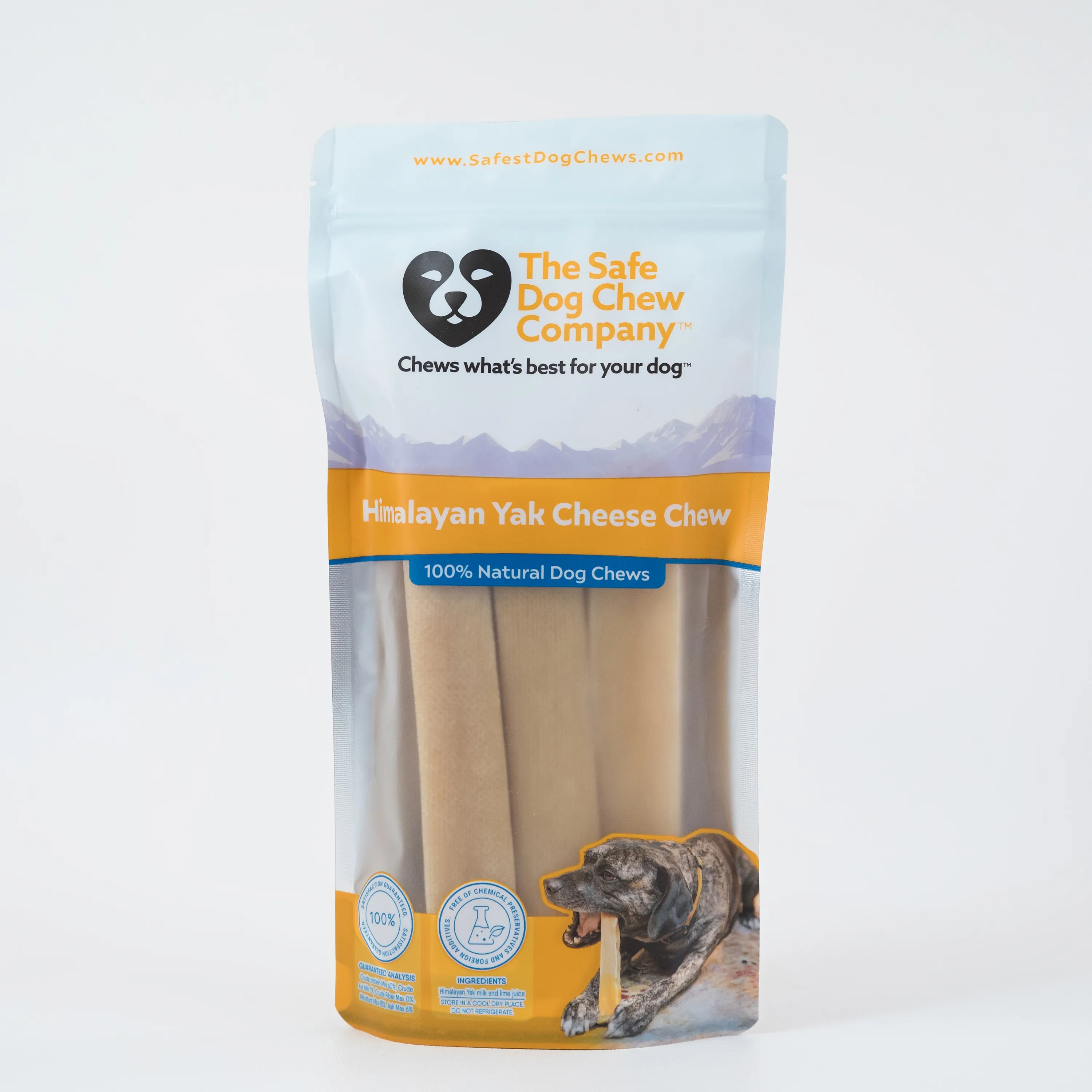
The term yak bones for dogs is a misnomer that stuck. Himalayan yak chews — the product people are actually looking for — contain no bone whatsoever. They're hard cheese chews, handcrafted from the milk of free-range yaks and cows raised in Nepal's high-altitude regions. The process that turns milk into a chew involves slow drying, not any kind of bone processing. No yak skeleton is involved at any point.
The confusion likely started because yak chews fill the same role that bones traditionally played: a long-lasting, satisfying chew for dogs who need serious gnawing time. They look roughly bone-shaped. They're hard. They last a long time. But structurally and in terms of safety profile, they're fundamentally different from any bone product.
Why do people search for "yak bones" when they mean yak chews?
Dogs have chewed bones for thousands of years, and "bone" is the mental category most owners reach for when thinking about long-lasting hard chews. "Yak bone" is a natural extension of that — a bone-like chew that comes from yaks. The fact that yak chews are made from milk rather than bone is a technical detail that doesn't always filter through when someone is just looking for something durable and safe for their dog to chew.
Why does the distinction matter?
Because real bones and yak cheese chews behave completely differently under chewing pressure. Understanding that difference is what makes the yak chews vs yak bones comparison meaningful — not just a semantic correction.
How Do Yak Chews Compare to Real Bones?
This is the comparison that matters for safety. Real bones — whether raw, cooked, smoked, or commercially processed — share a structural property that makes them risky for dogs: they're brittle under high chewing pressure. A determined dog can fracture a bone, and fractured bone creates sharp fragments that can lacerate the mouth, get lodged in the throat, or cause intestinal obstruction. These aren't rare outcomes — they're among the most common chewing-related vet visits.
Yak chews avoid this failure mode entirely. The slow-drying Churpi process creates a dense, hard texture that wears down gradually rather than fracturing. A dog working through a yak chew is steadily softening and consuming the outer layer — producing small, digestible pieces rather than sharp shards. That's what "no splintering risk" means in practice, and it's the structural property that makes these chews genuinely safer than bones for most dogs.
| Factor | Yak Cheese Chews | Real Bones |
|---|---|---|
| Splintering risk | None — wears down gradually | Present — fractures under pressure |
| Digestibility | Fully digestible, clean ingredient list | Varies by bone type; fragments may not digest |
| Ingredient transparency | Milk, lime juice, salt | Varies; often unclear what's added |
| Size range | Puppy through giant power-chewer | Inconsistent; sizing not standardized |
| Dental benefit | Mechanical plaque scraping as it softens | Some scraping, but fracture risk offsets benefit |
Are yak chews as long-lasting as bones?
Yes — and often longer. The dense, hardened cheese texture outlasts most soft treats, many rawhide options, and competes directly with bones in terms of how long a session lasts. For large breeds and aggressive chewers, the giant-sized yak chews provide the kind of sustained engagement that bones are traditionally valued for, without the splintering risk.
Do yak chews support dental health the way bones do?
Yes, and arguably more reliably. The mechanical scraping action as a dog works through a yak chew reduces plaque and tartar buildup in the same way that gnawing on a bone does — but without the fracture risk that can crack teeth or require emergency dental work. For dogs whose owners want dental benefit from a hard chew, yak chews deliver it without the downside. For additional dental support between sessions, dental health supplements cover what chewing alone can't fully address.

The Safety of Yak Chews: What You Actually Need to Know
The safety of yak chews isn't unlimited — it depends on correct use. No hard chew is completely risk-free when used without attention. The risks with yak chews are specific and manageable:
End-piece choking: As the chew wears down, the final piece can become small enough to swallow whole. This is the primary risk with yak chews and is easily managed: remove the end piece once it's small enough to fit in the dog's mouth, and either discard it or microwave it for 30–45 seconds. The microwaved piece puffs into a light, airy snack that's fully digestible rather than a choking hazard.
Incorrect sizing: A chew sized for a large dog handed to a small dog introduces swallowing risk from the start. A chew sized for a small dog handed to a power chewer disappears before the session provides any real engagement. Size matching is the most important safety decision — and it's made before the chew reaches the dog.
Unsupervised chewing in dogs that gulp: Dogs that tend to swallow rather than gnaw need closer supervision with any hard chew. For these dogs, bully sticks may be a more appropriate starting point — they're softer and easier to monitor as they get smaller.
What if a dog doesn't take to the chew?
Every order from The Safe Dog Chew Company comes with a 30-day satisfaction guarantee. If a dog ignores a chew, prefers a different flavor, or doesn't engage with the format at all, it goes back. That policy matters for first-time buyers who aren't sure how their dog will respond to a new chew type. Not sure which format to start with? The Ultimate Chew Box covers multiple options in one order — a practical way to find the right match without multiple separate purchases.
Who Should Give Their Dog Yak Chews Instead of Bones?
The straightforward answer: any dog owner who wants the long-lasting, satisfying chewing experience that bones provide, without the splintering and fracture risks that come with actual bone products.
This includes:
- Power chewers who've cracked bones or destroyed softer alternatives quickly
- Puppies who need sustained chewing engagement during teething without hard bone risks
- Senior dogs whose teeth may not tolerate bone fracture risk but who still benefit from regular chewing activity
- Dogs with sensitive stomachs who react poorly to rawhide or processed chews — the clean three-ingredient list eliminates most digestive triggers
- Owners who've had a bad experience with bones and want a hard chew with a predictable, manageable safety profile
The dogs who might not be ideal candidates for yak chews — those with known dairy sensitivity, significant dental problems, or a swallowing habit rather than a gnawing one — are the same dogs who wouldn't do well with bones either. For those cases, a vet conversation before introducing any hard chew is the right step.
FAQ
Are yak bones for dogs actual bones?
No. Himalayan yak chews contain no bone. They're hard cheese chews made from the milk of free-range yaks and cows raised in Nepal's high-altitude regions. The term "yak bones" is a common search phrase for what is actually a dairy-based chew product.
What makes yak chews safer than real bones?
Yak chews wear down gradually rather than fracturing under pressure. Real bones can crack into sharp fragments under chewing force, creating mouth, throat, and gut injury risks. The gradual wear-down of a yak chew produces small, digestible pieces rather than dangerous shards.
What ingredients go into yak chews?
Yak and cow milk, lime juice, and salt — made using the traditional Himalayan Churpi recipe. Zero chemical preservatives, artificial additives, or fillers at any stage of the process.
How long do yak chews last compared to bones?
Yak chews are competitive with bones in session length, and often outlast them for dogs who fracture bones quickly. Giant-sized options built for power chewers can last multiple sessions across several days.
Conclusion
If you came here looking for yak bones for dogs, you found the better alternative. Yak cheese chews deliver everything people look for in a bone-like chew — density, longevity, dental benefit, and serious engagement for heavy chewers — without the splintering risk that makes actual bones a gamble for many dogs. Three ingredients, a predictable safety profile, and a size range that covers every dog from small puppy to giant power chewer. That's the complete picture.


