

Safe Teething Puppy Chews for Sore Gums

By The Safe Dog Chew Company Editorial Team · Updated 2026-08-07
Himalayan yak chews from The Safe Dog Chew Company offer safe relief for teething puppies, handcrafted from naturally preserved yak and cow milk with zero chemical preservatives, artificial additives, or fillers. Fully digestible and splinter-free, these hard cheese chews withstand aggressive gnawing while protecting emerging teeth, gums, and household furniture from destructive chewing sessions.
Key Takeaways
- Puppies begin teething at three weeks old and complete adult teeth development by six or seven months.
- Appropriate chews must match your puppy's specific age, size, breed, and individual chewing intensity level.
- Safe chewing options prevent puppies from targeting hands and clothes during the teething phase.
- The Safe Dog Chew Company operates in Tucker, Georgia, providing specialized teething solutions.
Why Do Puppies Need Safe Teething Chews?
Puppies begin teething around three weeks of age, with adult teeth fully emerging by six to seven months. Sore gums during this stretch trigger an instinctive urge to chew. Unprotected households often pay the price in ruined shoes, furniture legs, and fingers. Appropriate teething puppy chews redirect that urge toward something safe and satisfying.
Puppies left without proper outlets tend to target hands and feet, since human skin is the most available "toy" nearby. That habit sticks. A puppy who learns early that fingers make acceptable chew targets often becomes an adult dog with the same instinct — a much harder pattern to break later.
What makes a chew safe for a teething puppy?
Safety comes down to supervision and size. Any chew, no matter how well made, should be discarded once it wears down small enough to swallow.
Owners evaluating the best chews for teething puppies should weigh a few factors:
- Texture that flexes against soft, developing gums
- No splintering risk under repeated gnawing
- Full digestibility if small pieces break free
- Size matched to the puppy's current jaw and mouth
For puppies with especially tender mouths, soft chew options for puppies offer relief without added strain on emerging teeth, making the teething window far less painful for both puppy and household.
What Makes a Chew Safe for Teething Puppies?
Safety comes down to three factors: ingredients, texture, and fit for the individual dog. Cheap teething puppy chews often rely on chemical preservatives, artificial dyes, and processed fillers that irritate sensitive digestive systems. Himalayan yak chews take a different approach, using a slow drying method rooted in the traditional Churpi snack of the Himalayas. That process naturally preserves the chew without synthetic additives, giving puppy parents a cleaner, more transparent option.
Texture matters just as much as ingredients. Splintering chews and brittle bones send sharp fragments into a puppy's throat or gut, creating real emergency-room risk. Yak chews avoid that danger entirely — they carry no splintering risk and remain fully digestible from the first bite down to the final soft, squeaky puff. For puppies that need additional variety alongside yak chews, collagen sticks offer another natural, splinter-free option gentle enough for developing mouths.
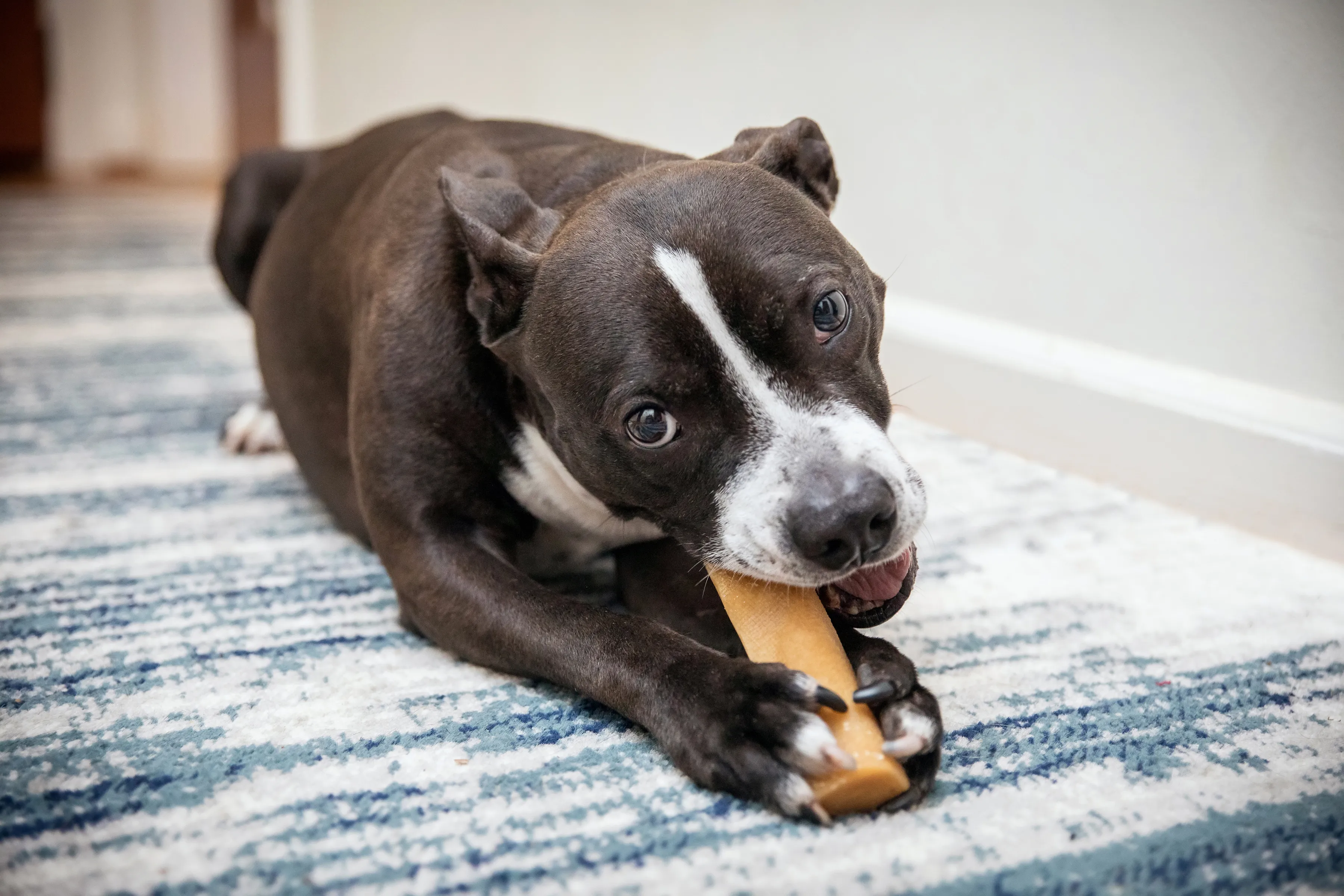
What's the safest texture for a teething puppy's gums?
Firm-but-yielding chews work best during teething. They apply gentle counter-pressure to sore gums without cracking into shards, which is why many puppy parents look for soft chew options for puppies alongside harder varieties.
Do all puppies need the same chew?
No single chew fits every dog. Selection should account for:
- Age — younger puppies need gentler resistance
- Size and breed — jaw strength varies widely
- Chewing intensity — aggressive chewers need denser options
The company's lineup reflects this, offering small puppy yak chews sized specifically for younger, smaller dogs alongside options built for stronger jaws. Among the best chews for teething puppies, fit matters as much as formula.
Which Chew Options Fit Your Puppy Best?
Small puppies require size-specific yak chews, available in variety packs to help owners find a favorite flavor without guesswork. Skipping the trial-and-error phase saves money and spares a pup's gums from products that don't suit their chewing style. Missing that match often means wasted chews, frustrated pups, and household items paying the price instead.
What's the safest way to let a puppy chew unsupervised?
A hands-free chew holder answers that concern directly. The holder secures the chew in place, letting a puppy work it down to the very last bite while lowering the risk of choking on a small end piece. For teething puppies especially, this setup offers soft chew options for puppies that still feel satisfying without demanding constant supervision.
Texture preference matters just as much as size. Puppies who shy away from harder chews often do better with Himalayan Cheese Puffs — a crunchy snack made from yak chew remnants that's gentler on sore, emerging teeth. This makes them one of the more approachable teething puppy chews for pups still adjusting to solid textures.
Finding what works shouldn't feel like a gamble. Every purchase carries a 30-day guarantee, giving puppy parents room to test different formats and textures until they land on the right fit. Not sure where to start? The Ultimate Chew Box takes the guesswork out entirely — a curated bundle that lets puppies try multiple options before committing to a single product.
Building Good Chewing Habits From the Start
The teething phase isn't just about surviving sore gums — it's the window where lifelong chewing habits form. Puppies that learn to redirect their chewing energy toward appropriate outlets early on rarely develop the destructive habits that frustrate dog owners later. A yak chew introduced during teething becomes a familiar, trusted comfort object as the dog grows.
Building the habit takes consistency more than anything else. Offering a chew at the same time each day — after meals, during afternoon downtime, or whenever energy starts peaking — teaches a puppy when and where chewing is appropriate. That structure pays dividends well beyond the teething window.
As puppies grow into adult dogs, their chewing needs shift but don't disappear. Transitioning from puppy-sized chews to larger formats keeps the habit going without interruption. The same natural ingredients that made yak chews safe for a teething puppy continue to support dental health, stress relief, and mental stimulation through adulthood. For dogs that benefit from additional nutritional support alongside their chewing routine, health supplements from The Safe Dog Chew Company complement the same clean-ingredient philosophy that defines every chew in the lineup.
Signs Your Puppy Is Ready for a Harder Chew
As puppies move through the teething phase, their tolerance for harder textures increases. Knowing when to upgrade matters — a chew that was right at eight weeks may be too soft to last or too easy to demolish by four months.
Watch for these signals that your puppy is ready to move up:
- Finishing soft chews in minutes — a sign the jaw is developing and needs more resistance
- Less sensitivity when chewing — puppies that no longer pause or whimper mid-chew have moved past the most tender gum stage
- Increased chewing aggression — targeting harder objects around the house is a clear signal to offer a denser chew
- Adult teeth visible — once adult teeth start breaking through, the jaw can handle firmer options without risk
The full yak chew collection spans every stage from early puppyhood through large-breed adulthood, making it easy to scale up as your dog grows without switching brands or ingredients.
FAQ
When do puppies start teething?
Puppies begin teething around three weeks of age, with adult teeth fully emerging by six to seven months. This extended window creates a strong instinctive urge to chew on available objects, including furniture and hands.
Why choose Himalayan yak chews for teething puppies?
The Safe Dog Chew Company, based in Tucker, Georgia, handcrafts these chews from naturally preserved yak and cow milk with zero chemical preservatives or fillers. They're splinter-free, fully digestible, and withstand aggressive gnawing while protecting teeth and gums.
How do I know when to discard a chew?
Discard any chew once it wears down small enough for the puppy to swallow. Safety depends on matching the chew's texture and size to the puppy's age, breed, and chewing intensity, plus ongoing supervision.
Facts
- The Safe Dog Chew Company is located in Tucker, GA, US.


