
Yak Chews: Dog Chews in Himalaya

By The Safe Dog Chew Company Editorial Team · Updated 2026-08-07
Himalayan yak chews are hard, long-lasting dog treats made from traditional yak and cow milk using an ancient Himalayan recipe. The Safe Dog Chew Company offers them in a 6-flavor variety pack, including banana, mint, pumpkin, and turmeric, giving dogs safe, all-natural chewing entertainment backed by a 30-day guarantee.
Key Takeaways
- Himalayan yak chews are crafted from traditional yak and cow milk using ancient recipes and traditional smoking methods.
- Over 65,000 customer reviews validate these long-lasting chews as durable dog treats supporting healthy chewing habits.
- The Safe Dog Chew Company, located in Tucker, GA, produces USDA-certified yak chews that are naturally odor-free.
- Dogs work the hardened cheese chew for hours, softening it with their mouths before consuming small pieces.
What Are Yak Chews Made From?
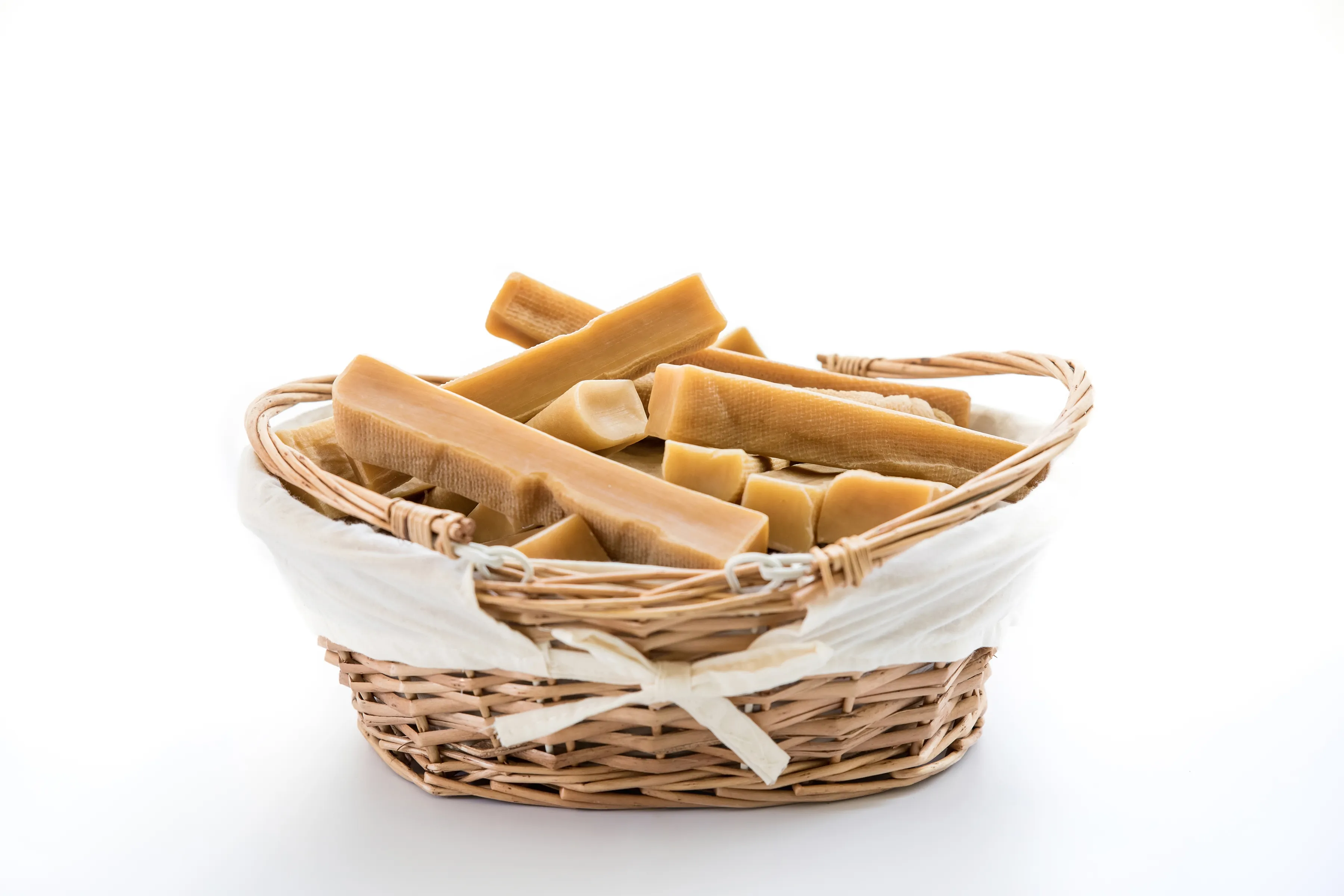
Yak chews consist of milk from free-range yaks and cows raised across the high-altitude regions of Nepal. Herders in these Himalayan communities have relied on this milk for generations, long before the treat reached pet stores. Cold mountain air and traditional handling methods shape the final product as much as the milk itself.
The foundation of Himalayan chews traces back to Churpi, a protein-rich snack Himalayan communities have eaten for centuries. Churpi began as human food, not a dog treat. Manufacturers adapted the recipe for canine chewing, preserving the slow-drying process that keeps the cheese free from additives and artificial preservatives.
How is the milk turned into a hard chew?
Producers combine yak and cow milk following an ancient recipe, then apply traditional methods passed down through Himalayan households. The mixture undergoes a gradual drying process rather than rapid industrial processing. This slow method removes moisture naturally, creating a dense, hard texture built for extended chewing sessions.
Are yak chews the same as bully sticks or rawhide?
No. Yak chews start from a dairy base, while bully sticks come from beef muscle and rawhide comes from animal hides. The dairy origin gives yak chews a firmer bite and a cleaner ingredient profile. The cheese-making process skips the chemical treatments common in rawhide production.
Each chew reflects centuries of Himalayan tradition rather than a modern manufacturing shortcut.
How Do Himalayan Chews Compare To Other Treats?
Two treats dominate the long-lasting chew market for dogs: yak chews and bully sticks. Both keep dogs occupied for extended periods, but they differ sharply in ingredients, texture, and risk profile. Dog owners across the Himalaya region and beyond have relied on the yak milk recipe for generations, long before it became a global chew staple.
Himalayan chews stand apart from rawhide in one critical way: rawhide relies on chemically processed animal hide, while Himalayan chews use only hardened yak and cow milk. That makes them a healthier alternative for dogs prone to digestive upset. Rawhide chews also splinter into sharp fragments; the hard-smoked texture of a Himalayan chew softens gradually instead, reducing choking risk.
What makes Himalayan chews different from rawhide?
Rawhide contains processing chemicals and breaks into fragments dogs can swallow whole. Himalayan chews contain none of that. They're lactose, gluten, corn, soy, wheat, and grain-free — a formula built entirely from natural dairy, nothing synthetic.
Do Himalayan chews help with dental health?
Yes. The dense, slow-softening texture scrapes plaque and tartar as dogs work the chew, supporting oral health with every session. Regular chewing sessions become a built-in dental care habit, not an extra chore for owners. If you're building a full dental routine around chewing, collagen sticks pair well alongside yak chews for dogs that need extra variety.
Are Yak Chews Safe And Ethically Sourced?
Yak chews rank among the safest long-lasting options for dogs, carrying no splintering risk and remaining fully digestible from first bite to last squeaky puff. That safety profile matters most for owners who watched a dog struggle with brittle rawhide or sharp antler fragments. Ethical sourcing runs alongside safety here, connecting each chew back to the communities of the Himalaya who craft it.
What makes yak chews safe for dogs?
Unlike splintering bones or rawhide treated with chemicals, Himalayan chews soften gradually as a dog works them, breaking into digestible pieces rather than sharp shards. This slow-softening structure is why they suit chewers of nearly any age or size.
Are yak chews sized for every dog?
Yes. The collection spans small puppy yak chews up through giant versions built for large breeds and dedicated power chewers. Pet parents avoid guessing at fit.
Sourcing practices reinforce that trust. For every pound of Original Himalayan Dog Chew sold, one textbook gets donated to a library built in partnership with the Manaram Foundation. Turning a chew purchase into direct educational support for local Himalayan communities. Based in Tucker, GA, The Safe Dog Chew Company ships these Himalaya-sourced chews to dog owners nationwide, pairing quality control with a supply chain rooted in fair trade.
How to Choose the Right Yak Chew for Your Dog
Not every yak chew fits every dog. Size, chewing style, and age all affect which product works best and how long it lasts. Choosing wrong means a chew that's gone in ten minutes — or one that's too hard for a smaller dog to make progress on.
A few things to consider before buying:
- Size matters most — a chew too small for a large breed becomes a choking hazard quickly; one too large for a small dog won't get used at all
- Power chewers need harder chews — dogs that demolish soft treats in minutes do better with the densest versions of the original recipe
- Puppies need gentler options — younger dogs with developing teeth benefit from smaller, softer chews that won't stress growing enamel
- Flavor variety keeps interest high — rotating through banana, mint, pumpkin, turmeric, blueberry, and strawberry options prevents boredom across multiple sessions
- Try a bundle first — the Ultimate Chew Box is the easiest way to test what your dog responds to before committing to a single flavor or size
The end piece of a yak chew deserves special attention. When the chew gets small enough to pose a swallowing risk, microwave it for 30–45 seconds. It puffs into a light, airy snack that's fully digestible and gives dogs one last satisfying chewing moment from every piece.
What Dog Owners Say About Yak Chews
Over 65,000 customer reviews back up the reputation yak chews have built in the dog owner community. The most consistent feedback points to two things: how long the chews last, and how calm dogs become while working on them.
Large-breed owners report chews lasting several days of regular sessions. Small-breed owners note that even a single chew can last a week or more, making the price-per-use among the lowest of any long-lasting treat on the market. Dogs that previously chewed furniture, shoes, or baseboards redirect that energy almost immediately once a yak chew is introduced.
Sensitive-stomach dogs also do well. The clean ingredient list — no artificial additives, no fillers, no chemical preservatives — means fewer digestive surprises even for dogs that react poorly to other treat types. For dogs that need additional digestive or joint support alongside their chewing routine, health supplements from The Safe Dog Chew Company are designed to complement the same natural-ingredient philosophy.
FAQ
What are Himalayan yak chews made from?
Himalayan yak chews are made from traditional yak and cow milk sourced from free-range animals raised in Nepal's high-altitude regions, using an ancient recipe and slow, traditional drying methods.
Are Himalayan yak chews different from rawhide?
Yes. Rawhide relies on chemically processed animal hide and splinters into sharp fragments. Himalayan chews use only hardened yak and cow milk and soften gradually, reducing choking risk.
Who makes Himalayan yak chews at The Safe Dog Chew Company?
The Safe Dog Chew Company, based in Tucker, GA, produces USDA-certified, naturally odor-free Himalayan yak chews and offers them in a 6-flavor variety pack with a 30-day guarantee.
Facts
- The Safe Dog Chew Company is located in Tucker, GA, US.


