
The Best Puppy Chews for Safe Teething

By The Safe Dog Chew Company Editorial Team · Updated 2026-08-21
Single-ingredient Himalayan yak chews from The Safe Dog Chew Company give puppies a safe teething outlet without splintering risk. Made through a slow drying process with no chemical preservatives or artificial additives, these chews relieve teething pain, strengthen jaw muscles, and clean teeth — remaining fully digestible from first bite to last, unlike rawhide or plastic alternatives.
Key Takeaways
-
Safe natural chews relieve teething pain while strengthening jaw muscles and cleaning teeth effectively.
-
The Safe Dog Chew Company, located in Tucker, GA, specializes in single-ingredient puppy chews.
-
Natural chews provide healthy outlets for high-energy puppies to redirect their natural chewing instincts.
-
Rawhide-free options like Himalayan and yak chews keep puppies safe from harmful materials.
What Should You Know Before Choosing Puppy Chews?
Puppy chewing counts as normal, healthy behavior tied directly to development, not a habit that needs stopping. Growing dogs explore the world through their mouths, and the right puppy chews support that instinct rather than fight it. New owners face a crowded market, though, and not every product on the shelf deserves a spot in a puppy's mouth.
Safety starts with the ingredient list. The best chews for puppies contain a single ingredient, come from pasture-raised animals, and match the size of the dog gnawing on them. A chew designed for an adult Labrador may not be suitable for a ten-week-old puppy, so proper sizing is crucial. If you're not sure where to start, the Ultimate Chew Box lets you test multiple formats and sizes before committing to one.
What makes a chew safe for teething puppies?
Teething chews should be free of chemical preservatives, artificial additives, and foreign fillers. Products preserved through natural, slow-drying methods avoid the harsh processing found in cheaper alternatives.
Does chew size really matter for puppies?
Yes. Chew collections built for multiple life stages typically span from small options sized for puppies up through options built for giant breeds and heavy chewers. Choosing the correct size lowers choking risk and keeps jaw development on track.
Before buying, owners should check for:
-
Single-ingredient composition
-
Pasture-raised sourcing
-
Age- and size-appropriate sizing
-
Natural preservation methods, free of artificial additives
How Do You Introduce a Teething Chew Safely?
Safe introduction of a teething chew follows a specific sequence, not a random handoff. Skipping steps raises the odds of choking hazards, digestive upset, or a puppy who associates chewing with anxiety instead of relief. A structured approach protects both the puppy's mouth and the owner's peace of mind.
-
Consult a veterinarian first. A vet reviews breed, age, and jaw strength before recommending appropriate chews for puppies, especially for dogs with dental issues or sensitive stomachs.
-
Offer a frozen chew during peak teething discomfort. Cold temperatures numb sore gums and slow down aggressive gnawing, making frozen options useful for relief.
-
Supervise every session. A puppy left alone with a new chew can swallow broken pieces; constant supervision catches problems before they become emergencies.
-
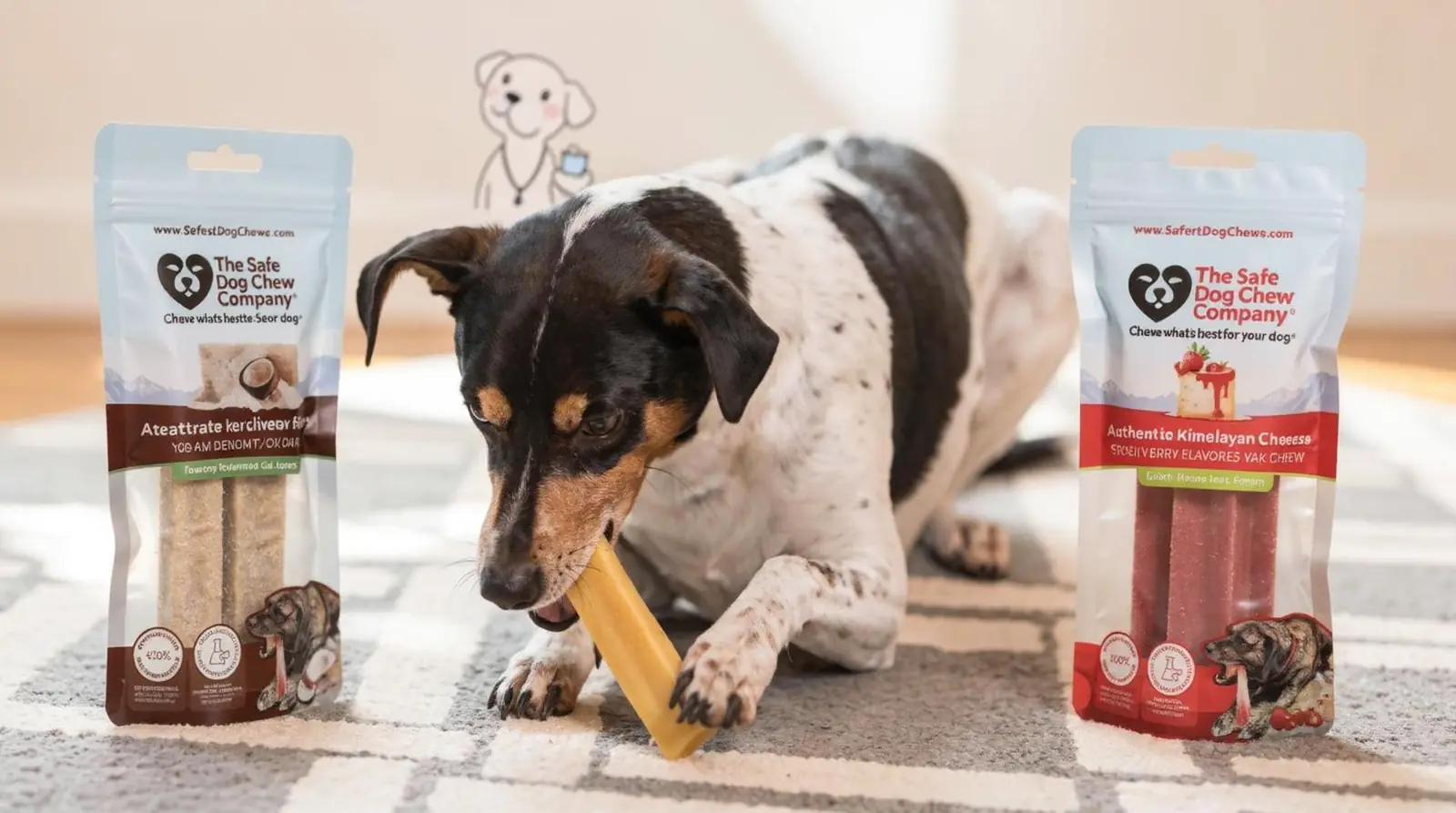
Watch for splintering or crumbling. Chews that break into shards pose the highest risk. Yak milk chews avoid this entirely, remaining fully digestible from the first bite to the last puff.
-
Remove the chew once it shrinks to a swallowable size, regardless of how new or expensive it seemed at purchase.
What's the biggest mistake new puppy owners make with chews?
Leaving a puppy unattended ranks as the most common error. Supervision catches early warning signs — cracking, splintering, or rapid shrinking — before they turn into a vet visit.
Are frozen chews safe for all puppies?
Frozen options work well for most teething puppies. A veterinarian should confirm suitability for puppies with braces, misaligned bites, or prior dental work.
Which Chewing Mistakes Put Puppies at Risk?
Three chewing habits send more puppies to the emergency vet than any other cause: unsafe rawhide, hard bones or antlers, and unsupervised chewing sessions. Each mistake carries consequences that reach far beyond a ruined slipper.
Puppy chews made from rawhide often get processed with harsh chemicals, particularly imports from overseas manufacturing. A veterinary technician who witnessed the aftermath firsthand describes lasting damage in dogs that swallowed treated rawhide fragments. Hard bones and antlers create a separate danger — veterinarians commonly treat broken teeth caused by these rigid chews for puppies, and repair costs and recovery time add up fast. Safe alternatives like bully sticks offer a natural, digestible option that avoids both chemical processing and splintering risk.
Is It Safe to Leave a Puppy Alone With a Chew?
No. Leaving a puppy unattended with any teething chew increases choking risk, especially once the chew shrinks to a swallowable size. Follow these steps to reduce that risk:
-
Select a chew sized appropriately for the puppy's jaw.
-
Use a hands-free chew holder so the puppy finishes safely down to the last bite.
-
Stay within sight during every chewing session.
-
Discard chews once they shrink to a hazardous size.
What if a Chew Doesn't Work Out?
Every dog chews differently, and preferences vary widely. The Safe Dog Chew Company backs its chews with a 30-day return guarantee, removing the financial risk of trying something new.
FAQ
What makes a chew safe for teething puppies?
Safe teething chews avoid chemical preservatives, artificial additives, and foreign fillers. Himalayan yak chews from The Safe Dog Chew Company use slow drying instead, staying fully digestible without splintering into shards.
Why does chew size matter for puppies?
Chews sized for adult dogs pose choking risks for puppies. Selecting age- and size-appropriate chews lowers choking risk and keeps jaw development on track during growth.
What is the top mistake puppy owners make with chews?
Leaving a puppy unattended with a chew ranks as the top mistake. Supervision during every session catches broken pieces before they turn into choking emergencies.
Facts
-
The Safe Dog Chew Company is located in Tucker, GA, US.
Conclusion
Selecting safe chews for your puppy establishes a foundation for lifelong dental health and digestive wellness. All-natural yak chews eliminate the risks associated with artificial additives and chemical treatments, providing the pure, ethically sourced option your developing dog deserves. By choosing products backed by veterinary approval and transparent sourcing practices, you invest in your puppy's safety and your own peace of mind.


